
My Safari Experience at Nairobi National Park in Kenya
- Through My Eyes

- 4 hours ago
- 5 min read
Going on safari at Nairobi National Park was one of those experiences that felt almost unreal, with wild animals roaming free just a short drive from the city. This unique reserve spans about 117 square kilometers and is home to over 50 species of large mammals and hundreds of bird species, all set against the backdrop of Nairobi’s skyline. It is a rare place where you can experience the wild so close to a bustling city.


As soon as we entered the park, the wildlife was already all around us. Troops of baboons moved through the grass and woodland, playfully chasing each other and climbing around as if completely unbothered by our presence.


Antelopes seemed to be everywhere across the plains, quietly grazing and blending so naturally with the landscape that sometimes it took a second look to notice them. Many species move in structured groups. The females stay together in herds protected by a dominant male, while bachelor males often travel in separate groups and occasionally challenge each other in short but intense fights for dominance. Watching these social dynamics unfold in the wild was fascinating.





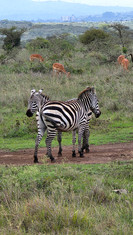
Across the open grasslands, zebras added striking contrast to the scenery with their bold black and white stripes against the golden savannah. Interestingly, zebras often stand opposite each other while grazing so they can watch for predators from different directions. Their stripes are also believed to create an optical illusion that makes it harder for predators to focus on a single animal when the herd moves together.







Not far from them, warthogs wandered through the grass, instantly recognizable with their distinctive snouts and sturdy bodies. They often kneel on their front legs while grazing, a posture that looks unusual but helps them reach the short grass they feed on.
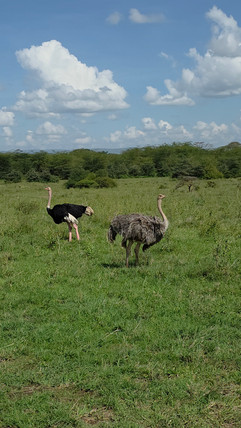
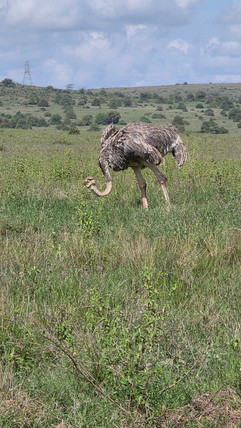
Hundreds of birds filled the skies and trees around us. Nairobi National Park is actually home to more than 500 species of birds, which makes it a paradise for bird watchers. Among them were ostriches, the largest birds in the world. Despite their size, they can run at speeds of up to 70 km per hour, making them one of the fastest animals on land.







We also watched giraffes moving gracefully across the plains, their long necks reaching the tops of acacia trees. At one point I even witnessed two giraffes fighting, something that looks surprisingly slow at first but is actually very powerful. Male giraffes fight in a behaviour known as necking, where they swing their long necks and heavy heads like pendulums, striking each other to establish dominance. Their tongues can grow up to about 45 centimetres long and are dark in colour, which helps protect them from sunburn while they spend hours feeding on leaves high above the ground.


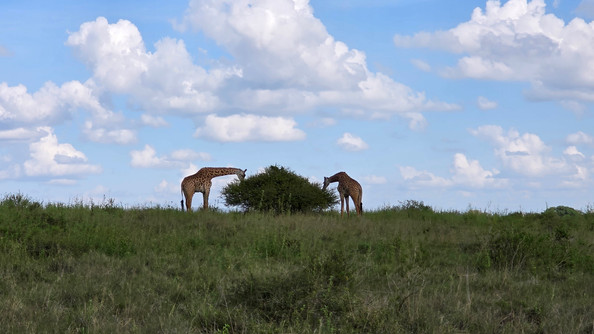


Another interesting fact about giraffes is the way they drink water. To reach the ground they must spread their front legs wide and lower their head, which leaves them vulnerable to predators. Because of this awkward position, giraffes tend to drink quickly and avoid watering holes whenever possible, getting much of the moisture they need from the leaves they eat.


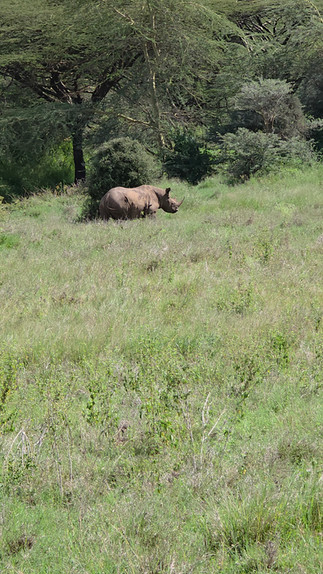
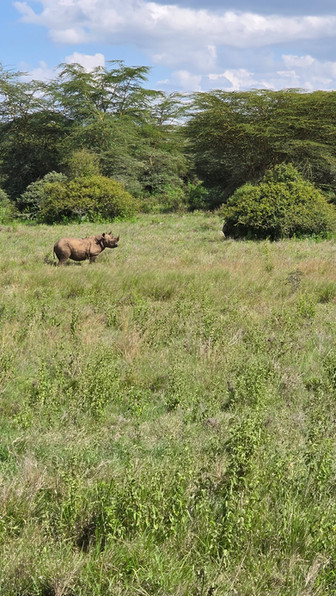
One of the highlights was seeing both black and white rhinos. Despite their names, a fun fact is that they are actually both grey in colour. The difference between them is not their colour but their shape and behaviour. White rhinos have a wide, square mouth that helps them graze on grass, while black rhinos have a more pointed lip that allows them to browse leaves and shrubs. Black rhinos are also generally smaller and more solitary, whereas white rhinos are often seen grazing in small groups. Nairobi National Park plays an important role in protecting these animals, especially the endangered black rhino, and is considered one of Kenya’s most important rhino sanctuaries. Seeing these incredible animals in the wild was truly a special moment.

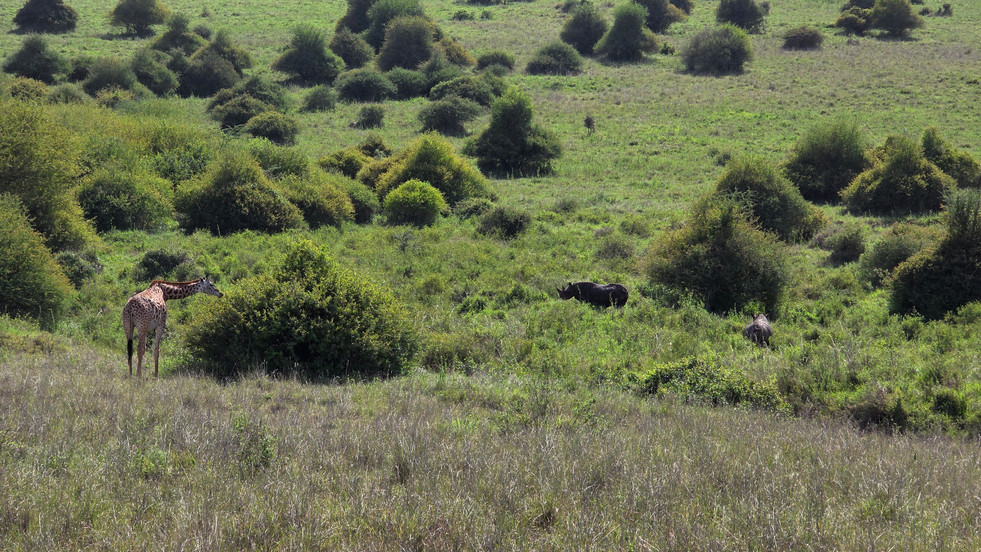







We also saw several buffalos, powerful animals that moved slowly across the plains. At one point we came across a buffalo that had already been taken down, most likely by a lion. It was a reminder that life in the wild is both beautiful and raw.
In the middle of the drive, we took a short guided walk along the river, which is part of what makes this park so special. After spending time in the safari vehicle, stepping out and walking through the landscape felt completely different. The area near the water was lush compared to the open plains. Riverine forests grow along the streams and rivers in the park, creating a greener environment filled with trees such as wild olives, fig trees, sycamore figs and acacias.







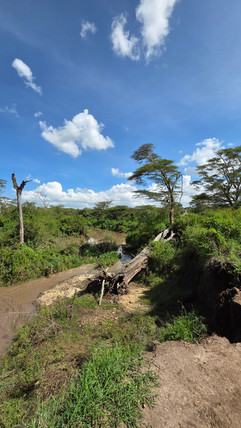



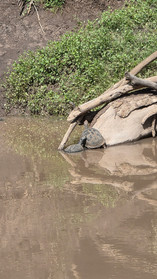
Walking with a guide also makes you notice details you would otherwise miss. Tracks in the ground, the sounds of birds and the different plants become much more vivid when you are on foot. The Mbagathi River and its network of streams create fertile areas that attract a variety of wildlife. These water sources support many animals and are home to species such as turtles and crocodiles, while birds gather along the riverbanks and animals regularly come here to drink.




We also visited what the guide referred to as the “rhino house,” part of the park’s vital conservation work to protect black rhinos. One interesting thing we learned is that male rhinos are very territorial and usually live alone. They often return to the same place to leave their dung, creating what is known as a midden, essentially a communal toilet that marks their territory and helps communicate with other rhinos through scent.
Even though I didn’t get to see lions up close this time, Nairobi National Park still offered a remarkable glimpse into Africa’s wild heart. Whether you are a bird lover, a wildlife enthusiast or simply someone who appreciates extraordinary landscapes, a safari here leaves a lasting impression. The diversity of wildlife, the changing landscapes and the quiet beauty of the park made this experience truly unforgettable. It was without a doubt one of the highlights of my trip. And honestly, it is hard to imagine another place where you can go from a city skyline to a full safari experience in less than an hour.


Practical Information for Visiting Nairobi National Park
Location: About 10 km from Nairobi city centre
Best time to visit: Early morning or late afternoon, when animals are most active
Typical safari duration: Half day or full day
Wildlife highlights: Rhinos, giraffes, zebras, buffalos, antelopes, lions and over 500 bird species
Official website: https://nairobipark.org
Did you know? Nairobi National Park is the only national park in the world located right next to a capital city!





Comments